




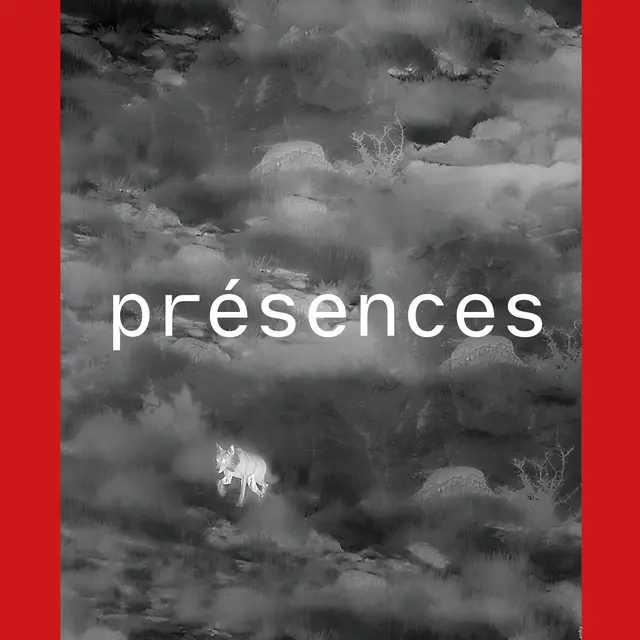
Guided tour of the exhibition ‘Présences’ with Mélanie Hugon-Duc, director of the Bagnes Museum, accompanied by artist Jean Faravel.
Artist, sound engineer and director Jean Faravel accompanies visitors from the moment they enter the museum with sounds suggesting the presence of wolves. In the children's room, the relationship is reversed. The invisible wolf is now observed and mapped. Here, the artist presents a sound and visual installation that answers the question: ‘Wolf, are you there?’. The cabin becomes an observatory of these places where the wolf roams and leaves its mark through place names. Names that we become attached to, that fall into common usage, and behind which we can still sense its presence.
The exhibition ‘Presences’ tackles the subject of the wolf by exploring the age-old and contemporary relationships between wolves and humans in the context of the Valais region and, more broadly, the Alps.
Echoing the perception of the inhabitants, farmers and shepherds of the Alps, for whom the presence of this now protected predator is ‘too close’, the museum becomes a home. The wolves have entered it.
The blurring of the boundaries between domestic and wild arises in familiar living spaces: a living room where humans and wolves have cohabited over time, a garden where dogs and wolves play with the meaning of evolution, rooms of attachments, predation and transformation. A path where wolves from bestiaries, taxidermied, in thermal images or as soft toys, rub shoulders like so many presences watching over a wolfish world connected to the human world.
