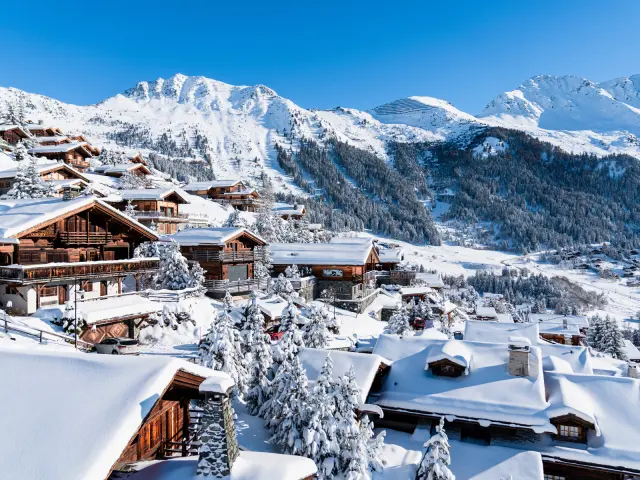
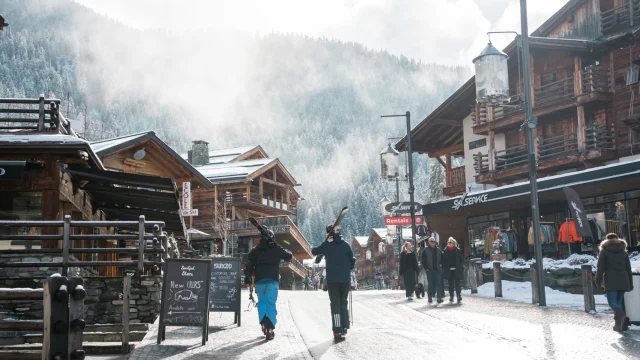
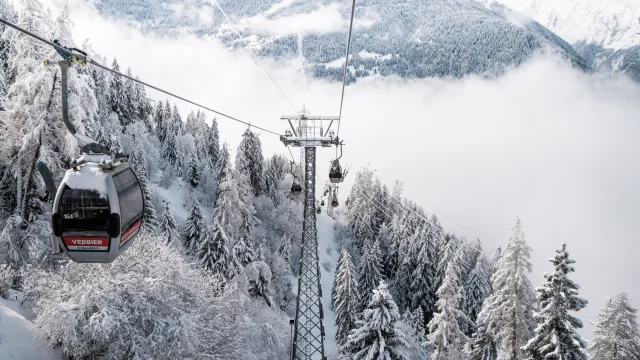
©Haut Val De Bagnes @ Raphael Surmont 1

Nature, wildlife and you

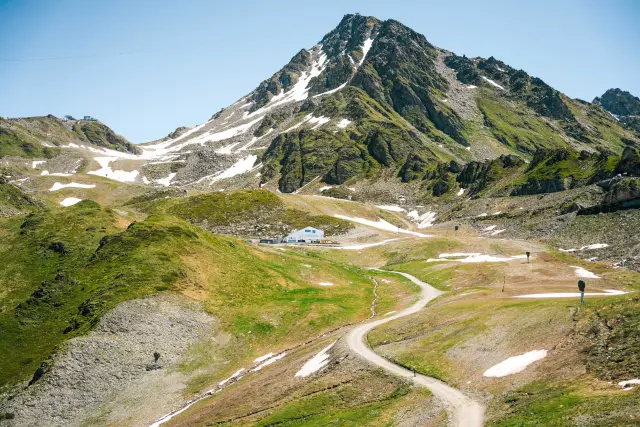
Within the destination Verbier – Val de Bagnes, nature is far more than the stunning backdrop to your stay: it is living, vulnerable and shared. This is where you walk at first light, glide silently through the mountains and spend your evenings outdoors beneath the stars. Whether ski touring, cycling or simply walking along the trails of the protected Haut Val de Bagnes area, your behaviour makes all the difference. By acting like the best possible guest, you help preserve a calm and diverse habitat for wildlife, alpine plants and fungi, and with it the long-term balance of the entire ecosystem.

©Wood @raphaelsurmont

Moving differently

Less noise. More contemplation.

Trains, buses, lifts and bikes: here, everything is designed so you can move with the flow of soft mobility. Choosing public transport, hopping on your bike or simply walking a little further is often the best way to discover Verbier – Val de Bagnes and all the little gems hidden along the way.

Responsible travel: the right reflexes in the mountains

Observe, without disturbing.

Staying on marked trails, keeping your distance from wildlife, closing gates behind you, keeping your dog on a lead and picking up after it: simple actions that help protect a balance that is sometimes invisible. 
The mountains are shared with those who live here, humans and animals alike.

Small, simple gestures

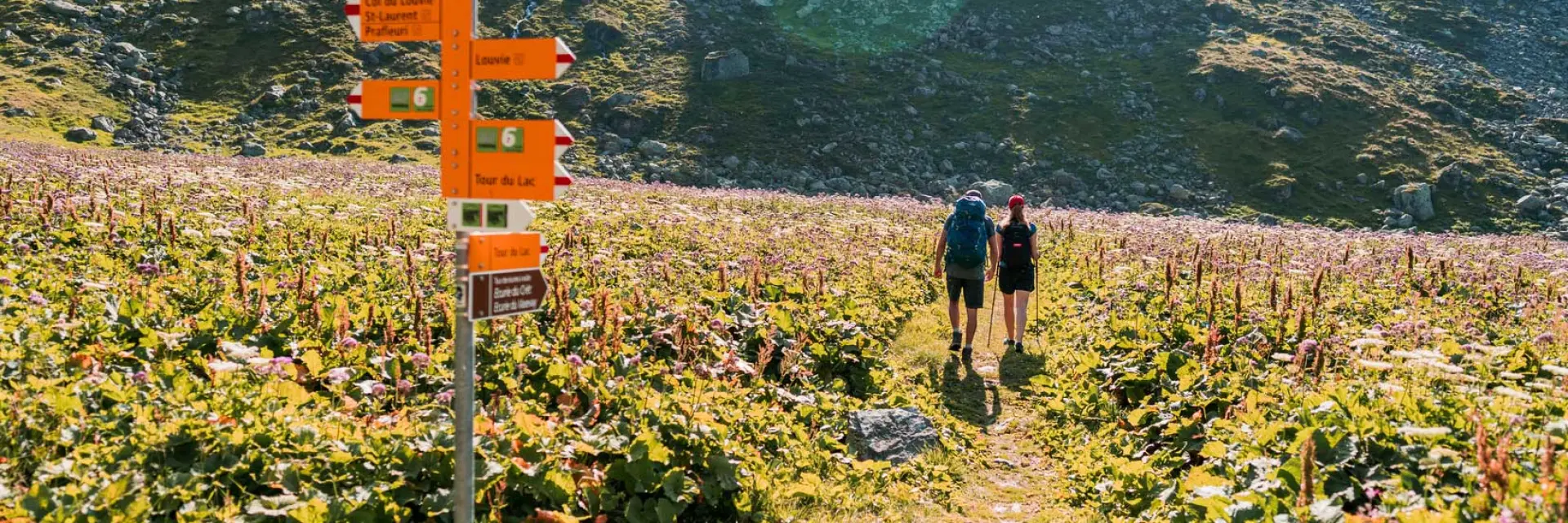
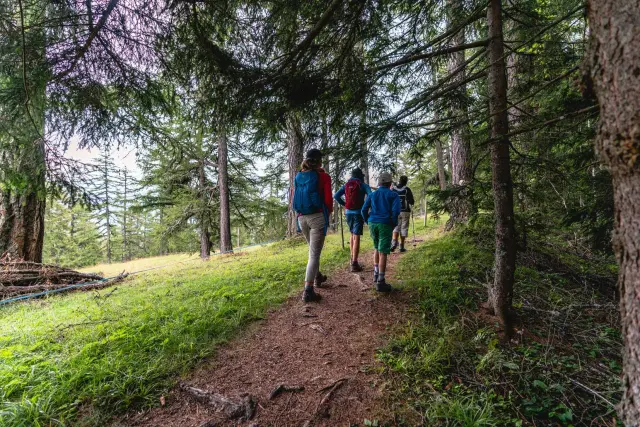
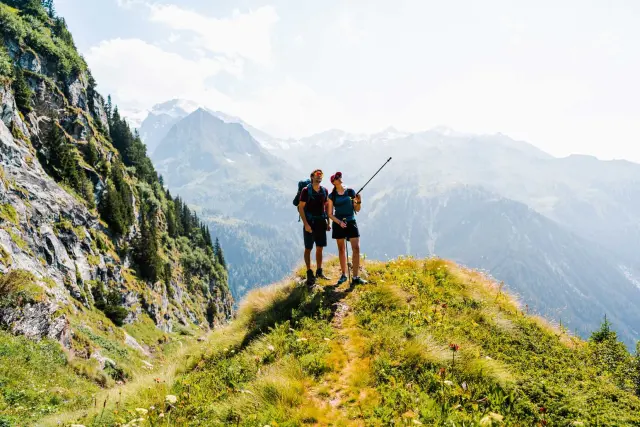
Stay on marked trails

By following the indicated routes, you help protect the soil and the natural environment, while avoiding disturbing an entire ecosystem that quietly thrives in its own home. 

©Marche Sur Sentier @ Raphael Surmont
©Randonnee Ete @ Raphael Surmont

Respect wildlife

If you’re lucky enough to encounter wildlife, we invite you to:

  • Keep a safe distance
  • Do not follow them
  • Do not feed them

Wild animals are in their natural habitat and need peace and quiet.
Little tip: don’t forget your binoculars to observe them from afar.

Hibernation mode ❄️
In winter, some species hibernate or live off their reserves: disturbing them forces them to expend precious energy and can put their survival at risk.

Be mindful of fire risk

In a natural environment such as Verbier – Val de Bagnes, the risk of fire can be significant. Lighting a fire is strictly prohibited throughout the protected area of the Haut Val de Bagnes. Outside this area, do not light fires within 200 metres of woods or forests
At certain times of the year, municipal or cantonal regulations may impose a total ban on fires across the territory. If in doubt, check the latest information here

©La Chaux Ete @luciaharrison

What belongs to nature… stays in nature

Many species of flowers, animals, and fungi are rare or protected. We invite you to admire and photograph them while allowing them to grow and live freely in their natural environment. 

Keep it quiet

The Verbier – Val de Bagnes region is home to both wildlife and people. Whether by car, van, motorbike, bike or on foot, please respect the tranquillity of the area. 
Take a deep breath and leave your speaker switched off in your backpack to fully enjoy your experience in nature. 
Good to know: out of respect for everyone, all noise must stop from 10 p.m. in natural areas. 

Leave nature untouched

  • Your waste: Before heading out, remember to bring a small bag for your waste (including fruit peels, cigarette butts, and dog waste). You’ll find bins at most car parks or bus stops. If you come across litter along the way, feel free to pick it up 😊 You can find all mobile toilet locations across the territory here
  • Your needs: You might not know it, but yes, it’s a bit of an art! Choose a spot away from watercourses, then bury or cover your waste. Always carry a small bag or ziplock with you, very practical for tampons and sanitary products, so that no waste is left in nature. You can dispose of them later when you reach a bin. 

Enjoy
outdoor activities
 responsibly

Logo fair trail

In this incredible playground, you’ll meet many enthusiasts like you: on bikes, on foot or on horseback. To ensure everyone can enjoy the mountains, remember to share the trail, give way when needed and stay alert to vehicles if your route crosses a road.
With the exception of the bisses, which are mainly reserved for pedestrians, most mountain trails in the destination are shared by different users who pursue their passions on the same paths. Respect and awareness allow everyone to fully enjoy the experience.
In Valais, this coexistence is encouraged through the Fairtrail project, an initiative that promotes respect and tolerance between hikers, mountain bikers, farmers and nature. Its goal is to allow everyone to enjoy the trails while preserving the environment and local activities.

Finally, for your safety and to protect nature, remember to check paragliding flight zones, climbing areas, trail running and mountain biking routes, as well as the applicable regulations before heading out. 

Responsible bivouacking : a few reminders

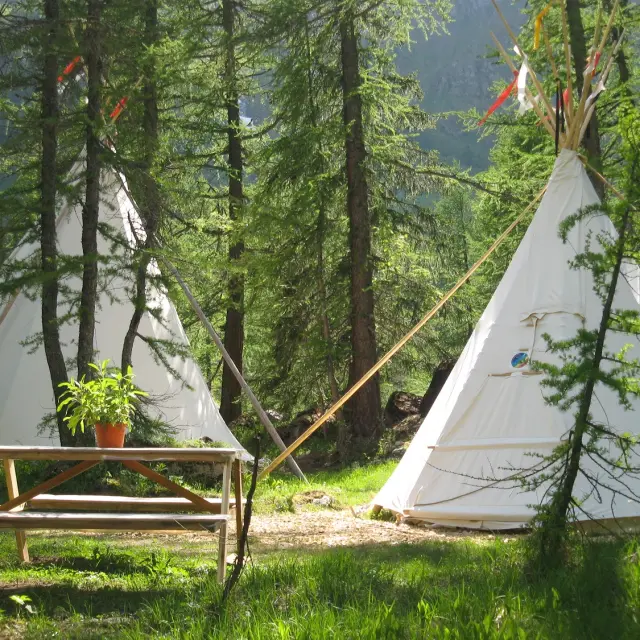
  • Bivouacking or setting up wild camping is strictly forbidden in the entire protected area of the Haut Val de Bagnes. Only an emergency bivouac (survival or extreme weather conditions) may be tolerated. 
    While bivouacking is generally tolerated in Switzerland, camping is prohibited throughout the municipality, except at the official Bonatchiesse campsite. 

Within the municipality of Val de Bagnes, a bivouac (sleeping under the stars without a tent) may be considered if the following conditions are respected: 

  • Above the tree line (generally around 2000 m) 
  • Avoid, if possible, areas under communal, cantonal or federal protection (information on map.geo.admin.ch). These biotopes host rare species. 
  • Check the weather forecast and take potential natural hazards into account (rockfalls, avalanches, floods, storms). 
  • Avoid riverbanks, as water levels can rise suddenly during heavy rainfall, and avoid swimming in these rivers. 
  • Do not make fires, or only use existing fire pits. 
  • Of course, leave your bivouac spot completely clean, without any waste (including food scraps). 
  • Learn the proper way to relieve yourself in nature and bring a small bag to take your toilet paper back with you (it should never be burned). 

Van life & camping

Waking up facing the peaks, opening the van door and feeling the fresh mountain air. Van life has that sense of freedom that makes you dream. 
In the Verbier – Val de Bagnes destination, wild camping and overnight parking outside authorised areas are not permitted. To preserve the landscapes, the tranquillity of the surroundings and the balance with local residents, overnight stays are only allowed in the designated campsites and camper areas of the destination. 
The good news: they are well equipped and ideally located, offering the perfect way to enjoy the mountains while respecting nature and the local environment. 

Our rangers are out in the mountains 
Our rangers help ensure that local regulations are respected, and the area is protected. You may meet them out in the field — they can guide you to the authorised campsites and camper areas in the destination. 

Water in
the mountains

In the mountains, water is not available everywhere. On some routes, water points can be rare or even non-existent. 
Remember to bring enough water and hydrate regularly throughout your outing. 

Swimming in the mountains

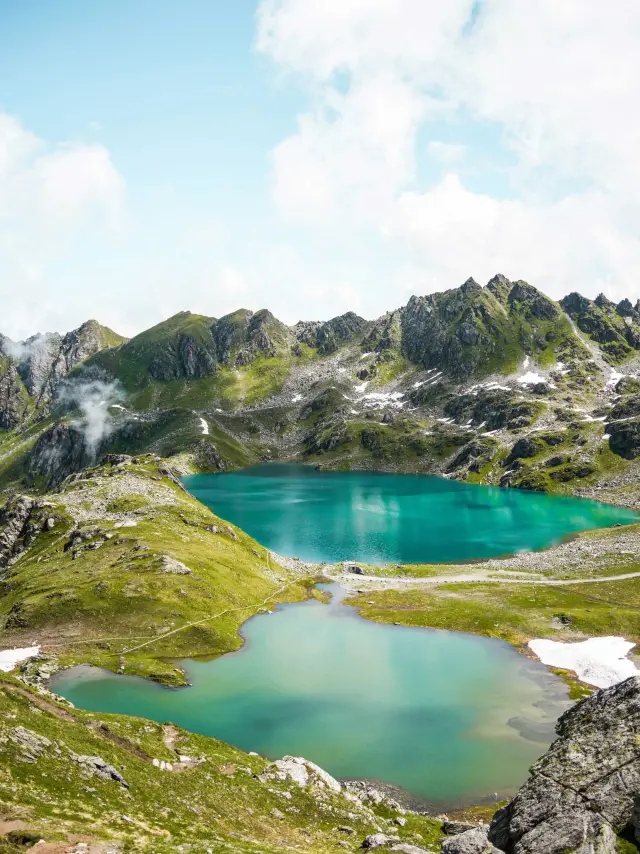
Diving into a high-altitude lake — clear water, silence, peaks all around — is a magical experience. But these environments are also fragile
In certain protected areas, such as the Haut Val de Bagnes Federal Wildlife District, swimming may be restricted or prohibited in order to preserve wildlife and natural habitats. Be sure to check the local signage and respect the rules in place. 
Even where swimming is allowed, a few simple actions make a difference: 

  • Do not use soap or chemical products in the water 
  • Leave no waste behind 
  • Respect wildlife, vegetation and the tranquillity of the area 

Mountain lakes remain very cold, even in summer. Enter the water slowly, stay cautious and enjoy the moment surrounded by nature. 

Keep your distance from herds and livestock guardian dogs

Near grazing herds, you will often encounter livestock guardian dogs whose role is to protect the animals from predators such as wolves or lynx. They are working partners of farmers and shepherds — not pets.
If possible, we invite you to:

  • Give the herd a wide berth
  • Stay calm and passive, without trying to make contact or pet the dogs
  • Keep your distance and stop for a moment so the dogs can identify you
  • Speak to them calmly if you wish
  • Get off your bike and keep your dog on a lead
  • Make sure you are allowed to cross fenced pastures and always close gates behind you to prevent animals from escaping
  • Avoid using drinking troughs to wash your hands or feet so the water remains clean for the animals 😊

Little tip: to help plan your outing, don’t forget to check the map showing the areas where livestock guardian dogs are present

Coming with your dog Share the mountain, with them too.

In Verbier – Val de Bagnes, dogs are welcome. But out in nature, they are guests too. The mountains are a shared space where wildlife, livestock, and visitors live side by side. A few simple gestures help preserve this balance. 

Simple rules to enjoy the mountains together

  • Keep your dog under control

On trails, in alpine pastures or in the heart of the villages, your dog must remain under control at all times. It is forbidden to let a dog roam unsupervised, especially in public spaces or on agricultural land.

  • A leash is required in certain places

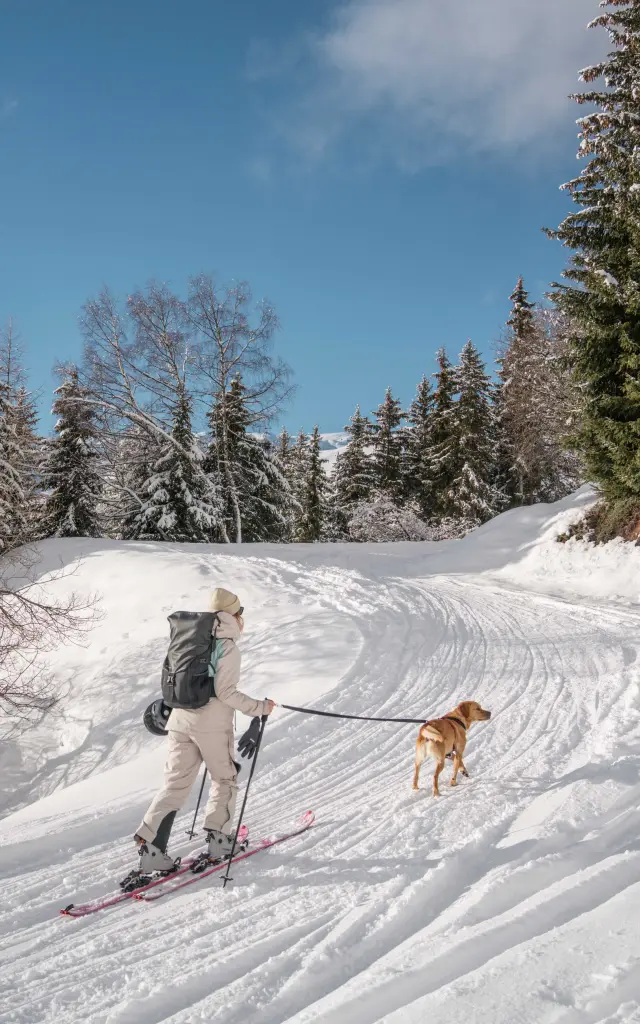
Within the Haut Val de Bagnes wildlife reserve area, dogs must be kept on a leash. Your dog must also be on a leash in villages, near schools, on public playgrounds and sports facilities, in public transport, at stations and stops, as well as in busy public places or areas where this obligation is signposted.

  • Respect wildlife

The mountains are a fragile refuge. Chamois, marmots, black grouse and roe deer live here all year round. Avoid sensitive areas and keep your dog close to you, especially at dawn and dusk.

  • Be careful around livestock

In summer, alpine pastures host herds and sometimes livestock guardian dogs. Approach calmly, keep your dog on a leash and walk around the animals if possible.

  • Anticipate encounters

Hikers, mountain bikers and families all share the same trails. Anticipate crossings and call your dog back if necessary.

  • Always pick up after your dog

A simple but essential gesture to protect pastures and keep the trails clean for everyone.

  • Respect signage

In some places, dogs may be restricted or not allowed for reasons of safety, hygiene or nature protection. 
During hunting periods, signs will also indicate that your dog must be kept on a leash. 

A calm dog, close to you, means a more peaceful mountain for everyone. 

Drone pilot ?

In the Haut Val de Bagnes Federal Wildlife District, the use of drones is strictly prohibited
This protected area is home to sensitive wildlife and rare species. Flying drones can disturb animals, especially during crucial periods such as breeding or wintering. Please respect these preserved areas and keep your drone in your bag within this perimeter
Outside protected areas, drones may be used within the destination provided that Swiss regulations from the Federal Office of Civil Aviation (FOCA) are respected

Some key rules: 

  • Always keep your drone within direct visual lineof sight during flight. 
  • Maximum altitude : 120 m above ground level. 
  • Never fly over gatherings of people (events, ski slopes, busy areas). 
  • Keep a safe distance from people and buildings. 
  • The sky is also shared with paragliders, helicopters and other aerial activities: stay alert and keep your distance. 
  • Never interfere with rescue operations: if a helicopter is operating nearby, land your drone immediately. 

Before every flight, consult the official FOCA guidelines and restrictions online to ensure the area is permitted and that you are aware of the applicable regulations. 
Please fly responsibly and respect the tranquillity of the mountains, their inhabitants and wildlife. 

FAQ

  • Can I bivouac anywhere in Verbier – Val de Bagnes?

    No. Bivouacking and wild camping are strictly prohibited throughout the protected Haut Val de Bagnes area. Outside this zone, only a light bivouac without a tent, and in compliance with current regulations, may be tolerated in certain areas.

  • Is it allowed to sleep in my van anywhere?

    No. Overnight stays in vans or motorhomes are not permitted outside designated areas. They must take place only in authorised campsites and camper areas within the destination, such as the Bonatchiesse campsite or the Le Châble P4 area.

  • Why should I stay on marked trails?

    Staying on marked trails helps protect the soil, limit erosion and avoid disturbing wildlife and plants in areas that are sometimes very sensitive.

  • What should I do if I encounter a herd or livestock guardian dogs?

    Stay calm, keep your distance and give the herd a wide berth if possible. Do not try to interact with the dogs. If you are cycling, get off your bike. If you are with a dog, keep it on a leash.

  • Can I make a fire in nature?

    In the protected Haut Val de Bagnes area, lighting fires is strictly prohibited. Outside this area, fires are only allowed in existing fire pits and must respect any municipal or cantonal restrictions, especially during dry periods.

  • Can I swim in mountain lakes?

    It depends on the location. In certain protected areas, swimming may be restricted or prohibited. Where swimming is allowed, avoid using soap or chemical products, leave no waste behind and respect the tranquillity of the surroundings.

  • Can I use a drone in the destination?

    Not everywhere. In the Haut Val de Bagnes Federal Wildlife District, the use of drones is strictly prohibited. Outside protected areas, drones may be used provided Swiss regulations are respected.

  • Can my dog accompany me everywhere?

    Dogs are welcome in the destination, but certain rules apply. They must remain under control at all times, be kept on a leash in several places and respect regulated areas, especially sensitive zones for wildlife and livestock.

  • Why should I take my waste with me, even biodegradable items?

    Even a fruit peel, tissue or food scrap can disturb the natural environment. In the mountains, what seems harmless can have a long-lasting impact on soil, water, wildlife and the quality of the landscape.

  • Can I pick flowers, mushrooms or take natural items with me?

    It is best not to. Some species are rare or protected, and what belongs to nature should remain in nature. You can admire and photograph them while leaving them undisturbed. Mushroom picking is allowed outside the Haut Val de Bagnes Federal Wildlife District, provided regulations and protected species are respected.

  • How can I reduce my impact during my stay?

    By using public transport or soft mobility whenever possible, staying on marked trails, taking all your waste with you and respecting signage, wildlife, livestock and the tranquillity of the mountains.

  • Why is it important to stay quiet in the mountains?

    Because the mountains are a living and inhabited environment for both animals and people. Reducing noise, avoiding speakers and respecting the calm of the area — especially in the evening — allows everyone to enjoy the experience.