
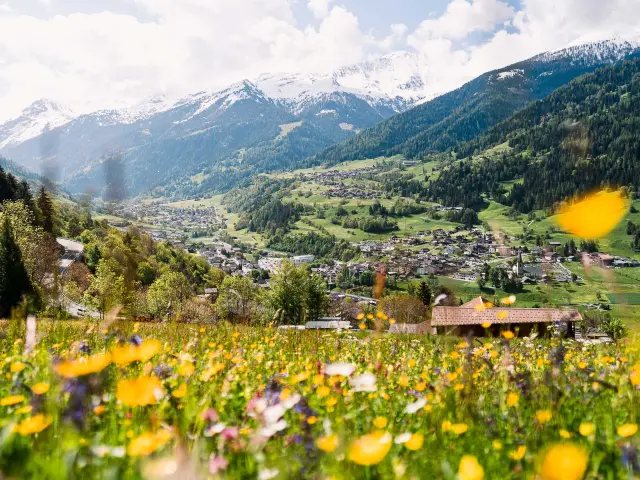
Traditions are still very much alive throughout the region. Agriculture shapes the landscape and plays an important role in preserving nature. By promoting local products and short distribution channels, the Grand Entremont region offers simple, authentic and respectful tourism.
Here, each product tells its own story, allowing visitors to discover the mountains in a different way, through the eyes of those who bring them to life every day.
Agritourism
Quick access
Grand EntremontA gourmet destination with a local flavour
In the heart of picture-postcard landscapes, the Commune of Val de Bagnes is part of the Grand Entremont region, a “Grand Site du Goût” (Great Taste Site) that gives pride of place to agriculture, local produce and the emblematic Raclette du Valais PDO.
A number of crops complete this agricultural landscape: cereals (wheat and rye) used in part for the Grand Entremont bread made by our local bakers, aromatic and medicinal herbs dried by the Valplantesdicinal herbs dried by the Valplantes Cooperative in Sembrancher, as well as apricot orchards and vineyards, mainly around Bovernier towards Martigny.
Beekeeping also plays a key role, with some 50 million bees helping to pollinate and preserve local biodiversity, supported by the Centre de Compétences en Apiculture in Sembrancher, where several beekeepers come to extract their honey.
 Dsc08271 170723 @raphaelsurmont 1224x816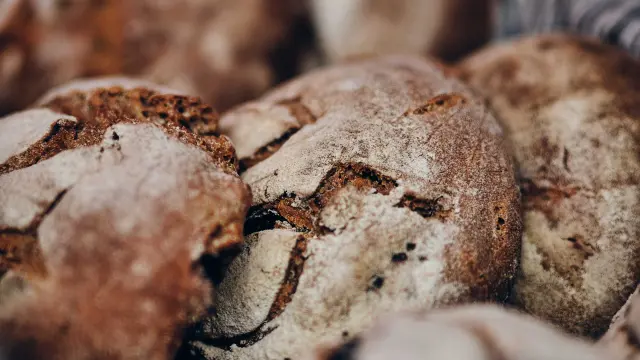
Products bearing the “ Grand Entremont- Le goût des cimes ” label are guaranteed to be locally sourced and made from the agricultural resources of our mountain valleys. You can find them in our dairies and village grocery shops, but they are also used by several restaurants in the region.
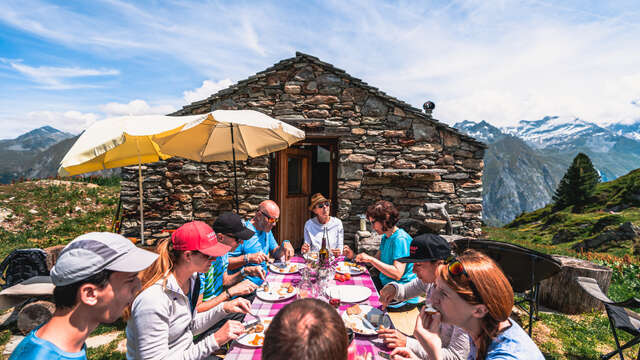
Hike, pause, repeatDiscover the mountain pastures and buvettes on your walks
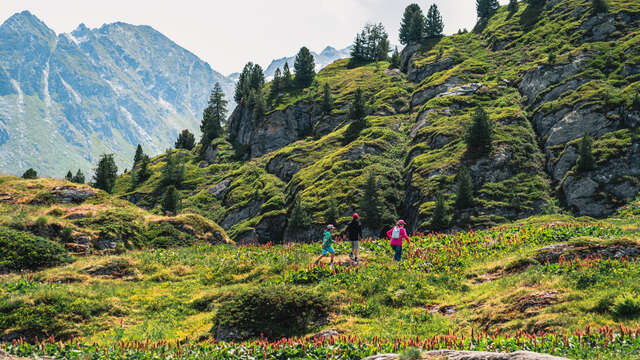
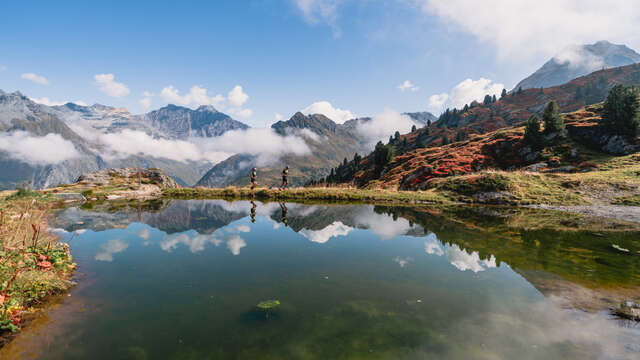
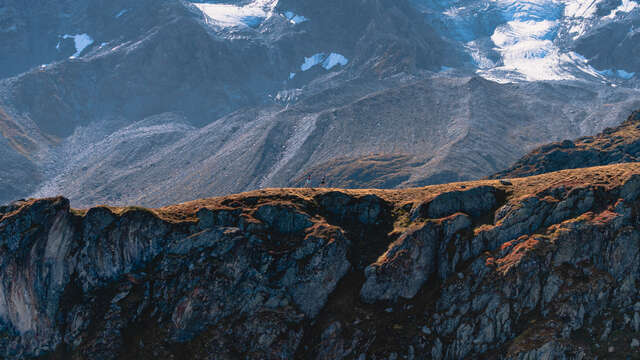
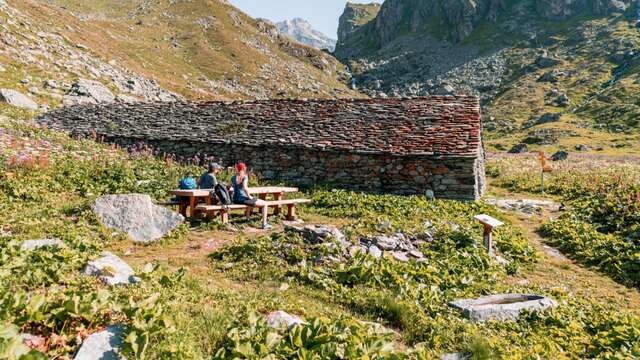
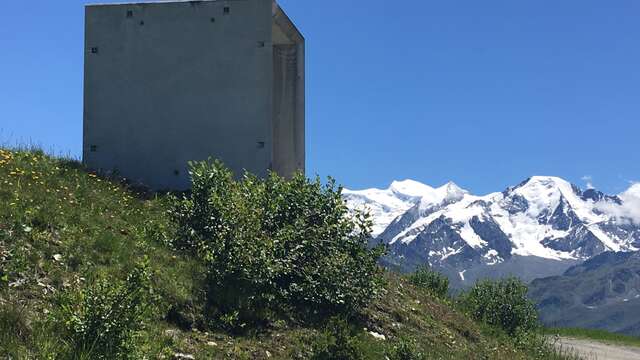
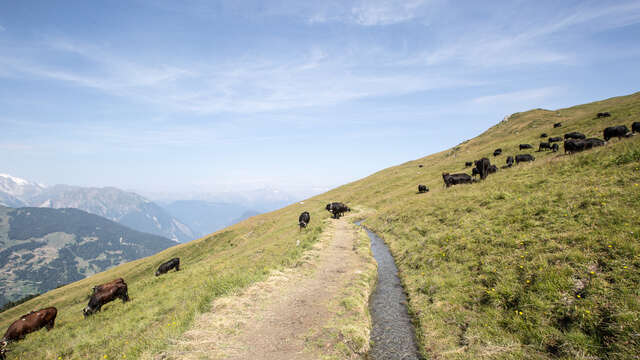
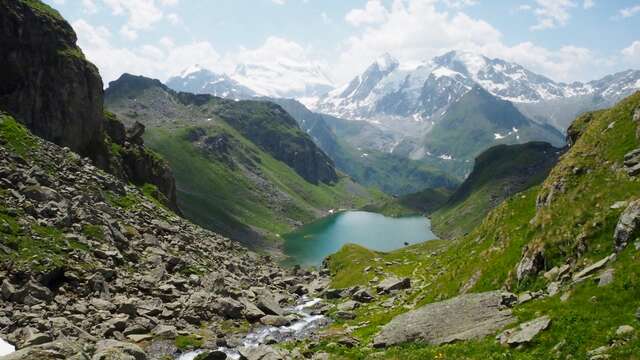
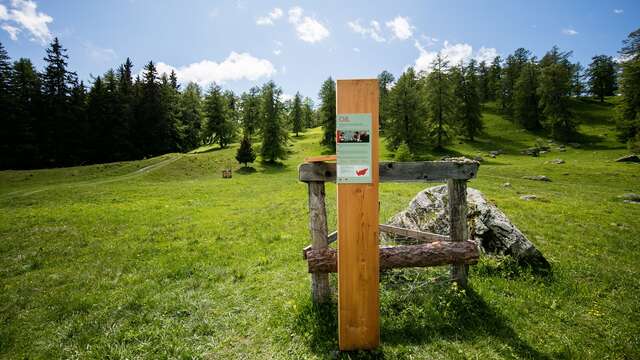
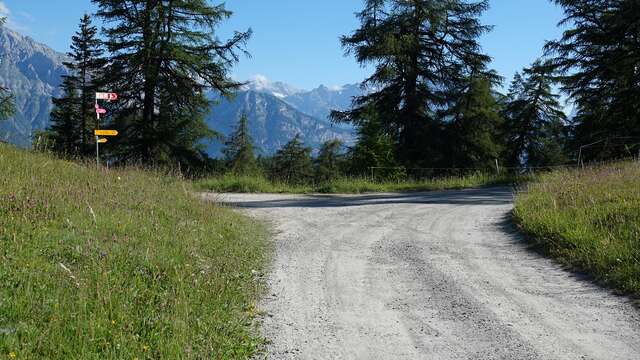
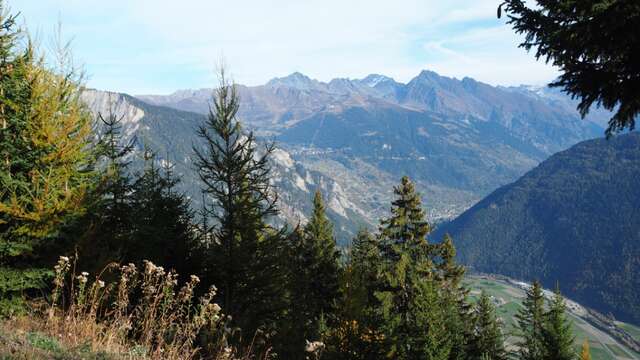

The mountains here are alive, wild and fragile. Two or three simple gestures and you leave it as beautiful as you found it.
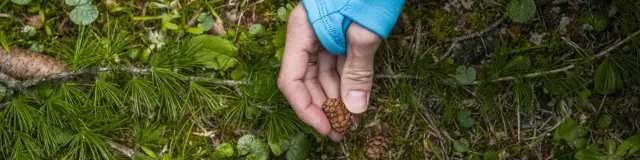
Bike, pause, repeatDiscover the mountain pastures and buvettes by bike
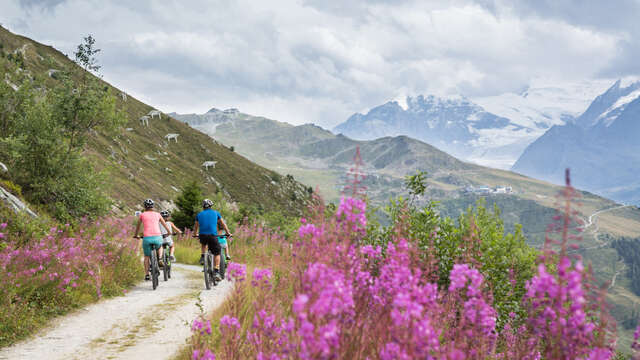
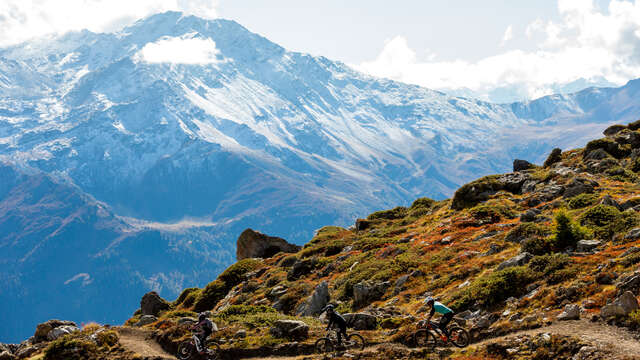
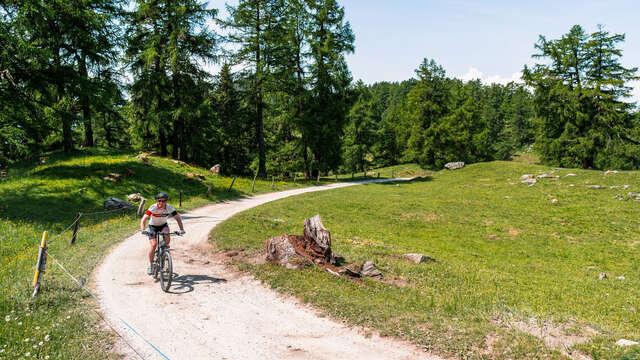
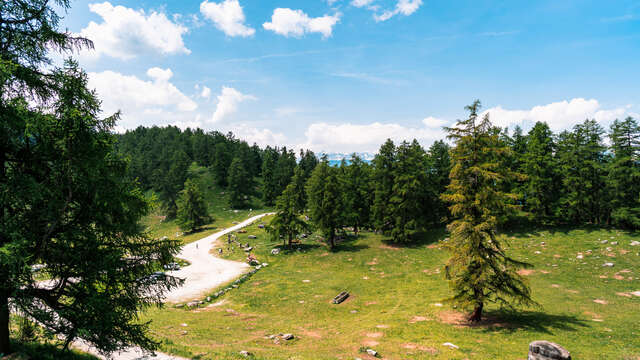
Raclette Valais PDO
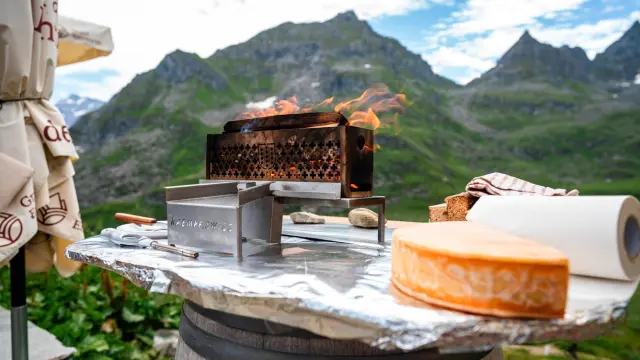
Raclette is one of the region’s signature dishes. It is made from Raclette du Valais PDO, a raw-milk cheese matured for several months, mainly from cows reared in the mountains.
Traditionally, the cheese wheel is heated, then the melted part is scraped directly onto the plate. It is served with potatoes and pickled vegetables.
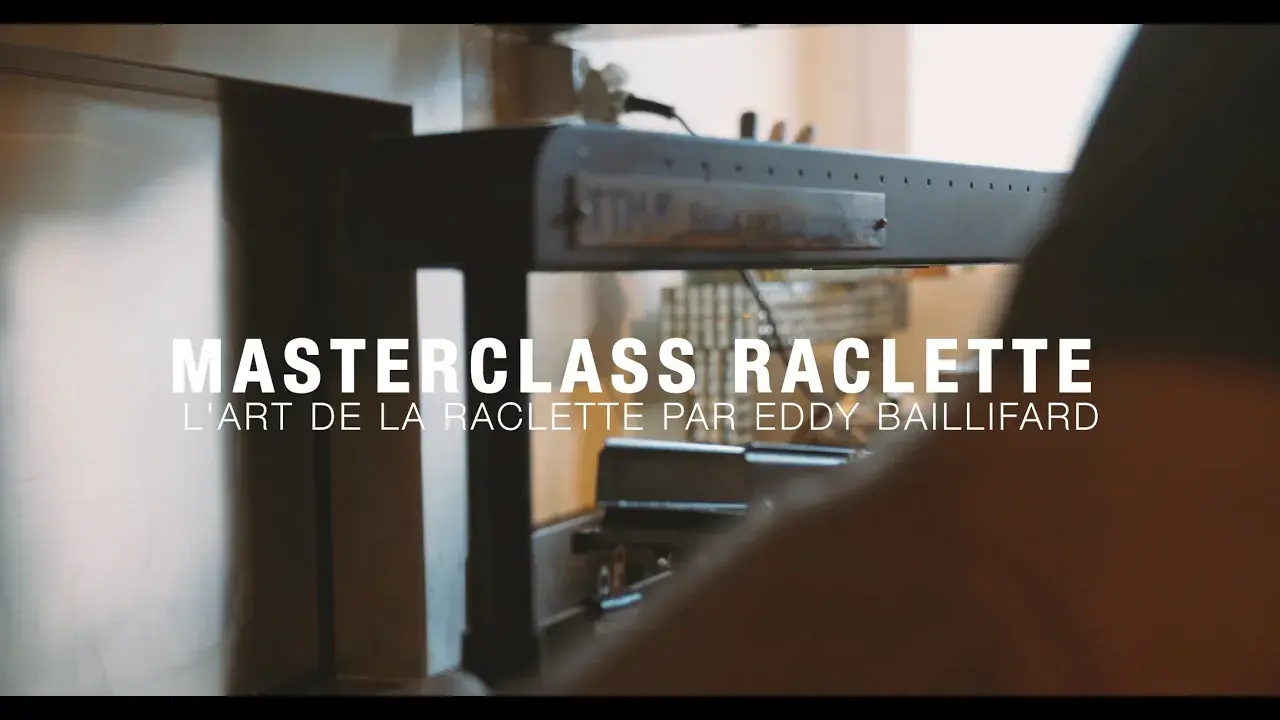
If there’s one thing the people of Val de Bagnes don’t joke about, it’s raclette. And to avoid alienating a Bagnard friend, make sure you distinguish between raclette and raclonette! And what’s the difference? For raclette, one person melts a half-melette pan and serves all the guests, whereas for raclonnette you use a device with small pans that you place in the middle of the table.
Fancy a raclette?Don't wait any longer, taste it!
Queen of the Val de Bagnes
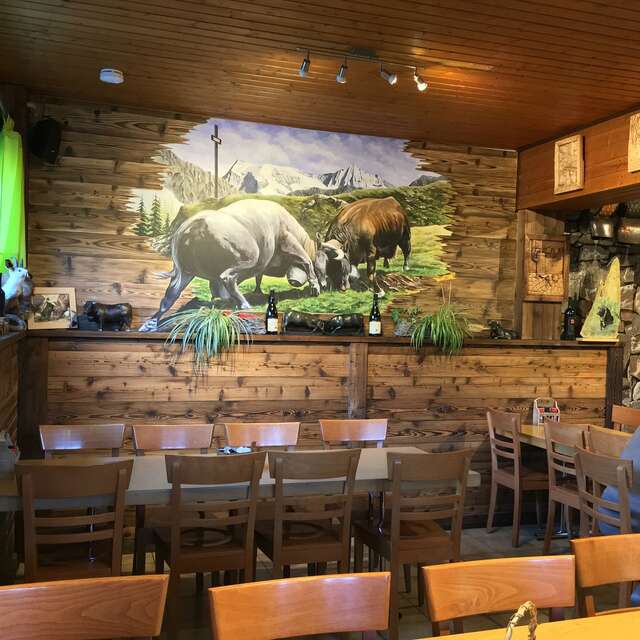
Dressed in their pretty black coats, Hérens cows are the pride of their owners and the people of Valais. Every summer, these ladies fight to decide which cow will be crowned queen of the mountain pasture. This natural phenomenon, typical of the breed, has given rise to regional queen fights that attract large numbers of breeders and enthusiastic spectators from the Valais, the Aosta Valley and the Mont Blanc region in particular.
The first fights in the mountains take place in June during the Inalpes.
The winning cow is given the title of “Queen” and symbolically leads her herd up to the mountain pastures.
The breed is also appreciated for its milk production (for PDO alpine and raclette cheeses) and for its meat, renowned for its finesse and pronounced flavour.
Our mascot Suzette is a Hérens cow. The only queen to pose for photos.
Hérens by birth. Queen of the Bike Park by passion.

Local highlights
Queen fights, farm brunches, visits to cheese dairies, markets and local festivals: all year round, Val de Bagnes celebrates those who bring the mountains to life. Encounters, tastings and deep-rooted traditions: this is Val de Bagnes at its best.
FAQ
- What is a PDO?
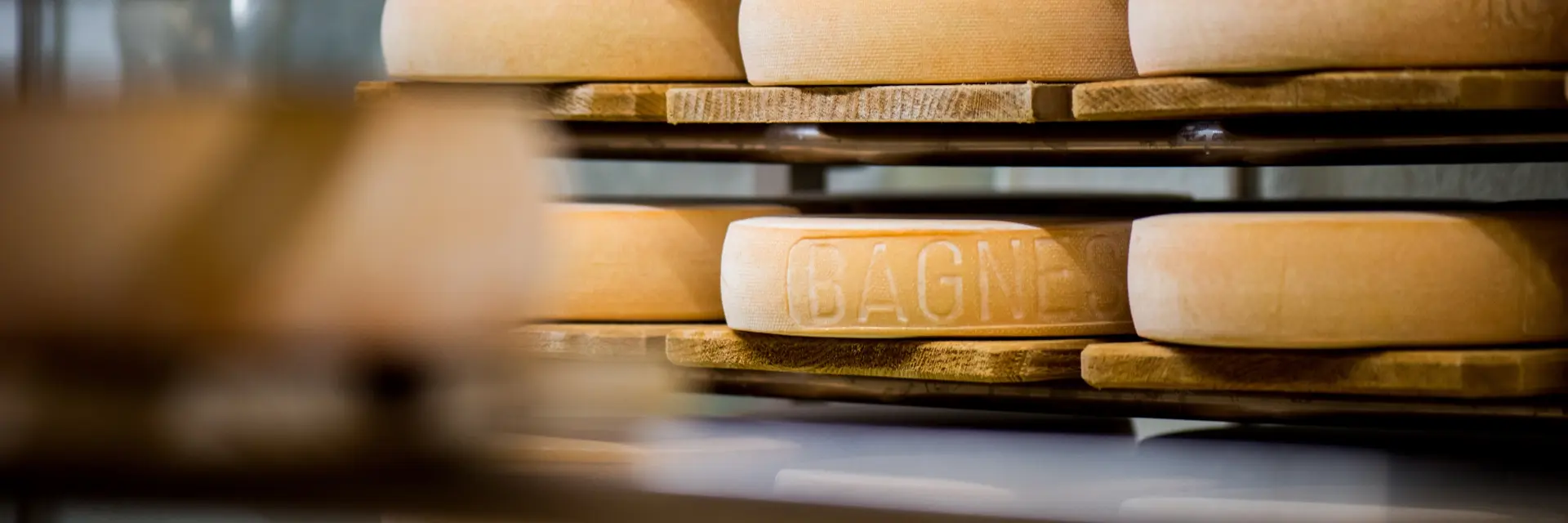
The Protected Designation of Origin (PDO) reserves the name Raclette du Valais for cheeses that meet production criteria that guarantee their quality, their link to the land and their authenticity. Raclettes du Valais PDO are made with raw milk from cows fed almost exclusively on grass and fodder from the region. The cheeses are matured on spruce boards for a minimum of 2 months (3 months if sold for scraping).
- How many Valais Raclettes PDO are made each year in our valleys of Bagnes, Entremont and Ferret?
Our five dairies and ten PDO mountain pastures (Les Ars, Bavon, la Chaux, le Coeur, Fournoutz, le Lein, la Lettaz, Mille, la Peule and le Tronc) produce 120,000 wheels of Raclettes du Valais PDO every year. In winter alone, around 350 wheels are produced every day at the Verbier, Liddes, Étiez and Orsières dairies.
- How do you know where a Raclette du Valais PDO is made?
Each cheese wheel bears the name of its dairy on its heel:
- Bagnes 1 –> Verbier
- Bagnes 4 –> Liddes
- Bagnes 30 –> Lourtier
- Bagnes 98 –> Etiez
- Do we say raclette?
In Valais, we say Raclette when we talk about cheese. Raclette is the portion of melted cheese that has been scraped off.
- Can we sleep on a farm near Verbier?
Yes! In Montagnier, just 10 km from Verbier in the Val de Bagnes, Mauricette and Jean-Louis Fellay have opened an agritourism accommodation with double and family rooms, homemade breakfast and goat farm visits. A true immersion into rural life, just a stone’s throw from the Le Châble cable cars. More info here