 Raphaelsurmont290720dsc08397 2
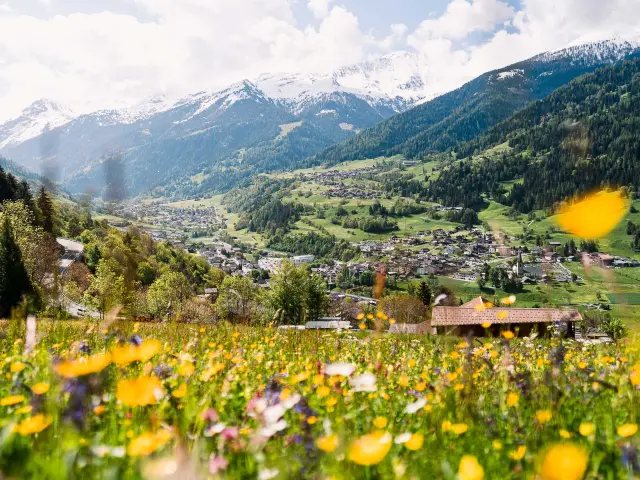
Wildlife and flora can also be discovered through events: guided outings, exhibitions, activities and encounters designed to better understand the living world — and respect it.
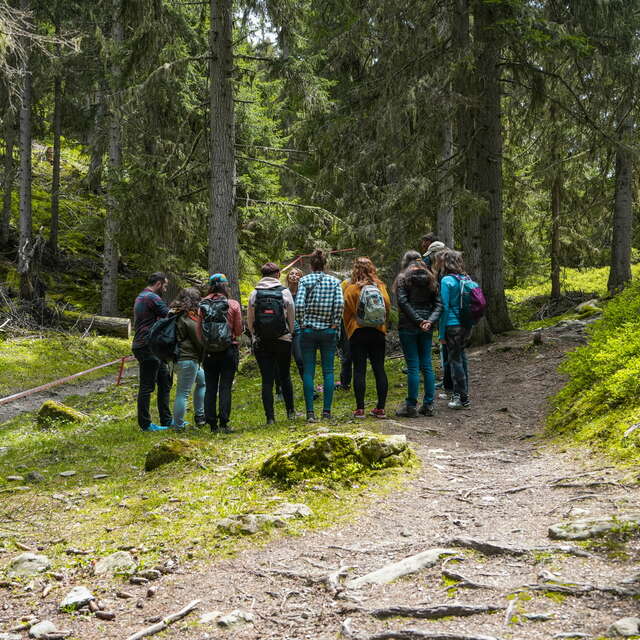
Here, you don’t walk alone. Passionate guides lead you along the trails, sharing their insights, stories and knowledge. With every step, you discover the local fauna and flora. Discover and book your outing.
The mountains here are alive, wild and fragile. A few simple gestures help keep them as beautiful as you found them.
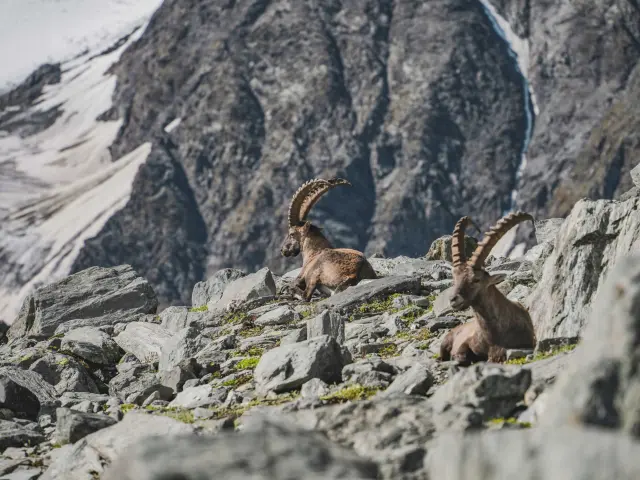
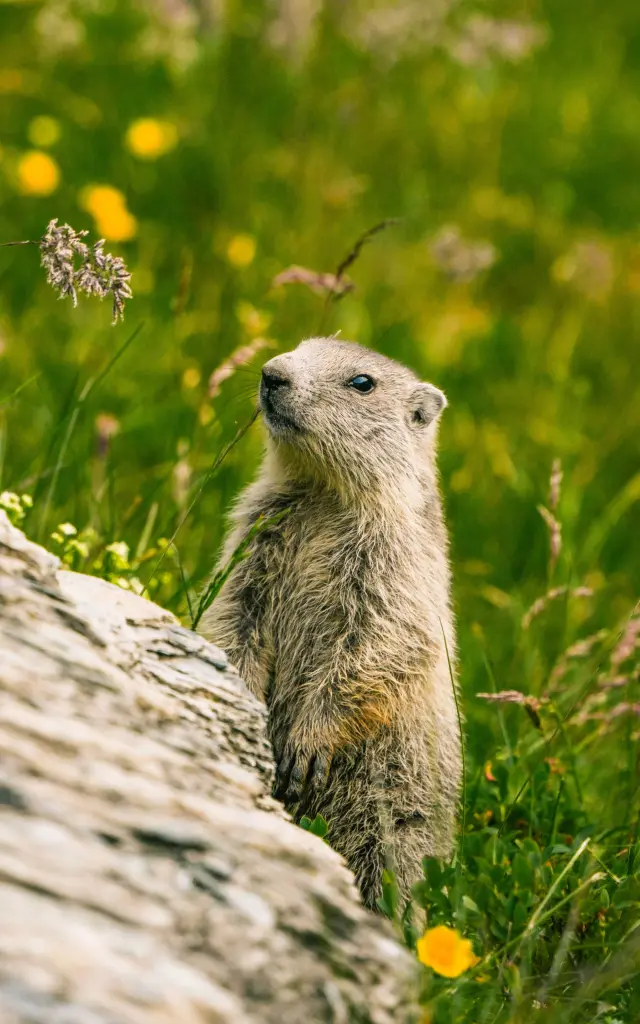
In the Val de Bagnes, you can observe ibex, chamois, marmots, hares, foxes, the bearded vulture and many alpine birds.
Mostly at higher altitude, early in the morning or at the end of the day, especially in spring and summer.
The ibex is larger and more massive, with large curved horns. The chamois is more agile and faster, with thinner horns.
Yes, especially between May and September, in sunny alpine pastures.
The bearded vulture, golden eagle, eagle owl, rock ptarmigan and black grouse.
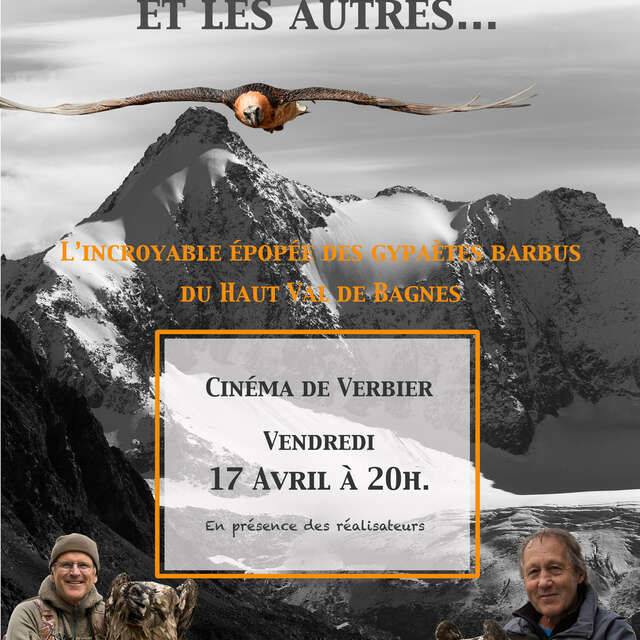
Yes, it is present in the Upper Val de Bagnes.
From spring to autumn, when animals are more active and visible.
Yes, but winter requires even more discretion and patience. During this period, it is essential not to disturb wildlife: any unnecessary movement exhausts them.
If you encounter a wild animal, do not approach it, touch it or feed it. Observe it from a distance to preserve its tranquillity.
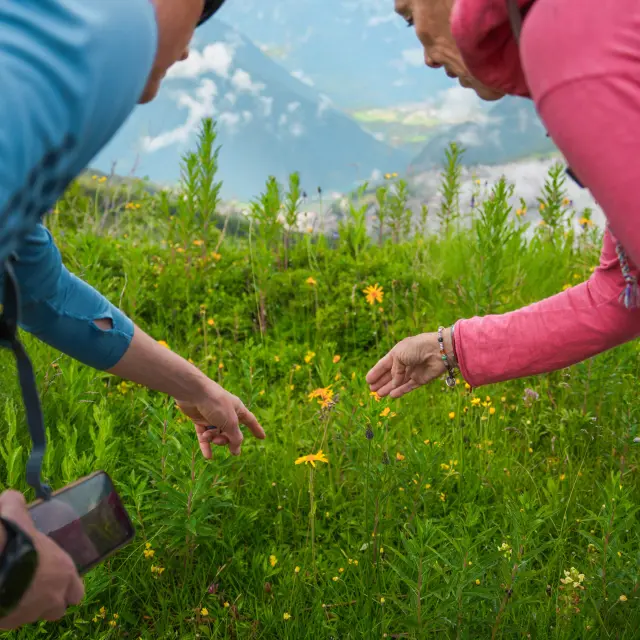
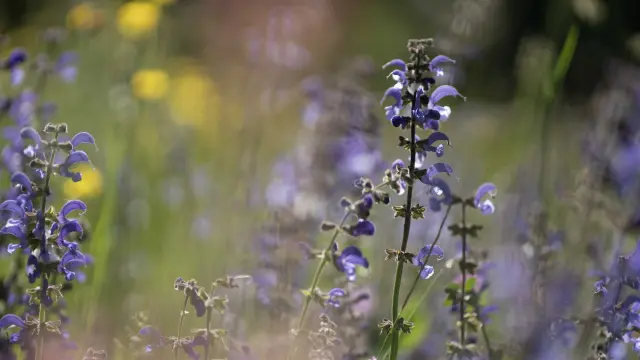
Orchids, saxifrages, gentians and many typical alpine flowers.
Yes, they can be observed in certain alpine areas of the Val de Bagnes, especially at higher altitudes.
Yes, several plants and fungi found here are listed on the Swiss Red List. Please stay on marked trails to help protect them.
Because they are rare, fragile or threatened by the loss of their natural habitat.
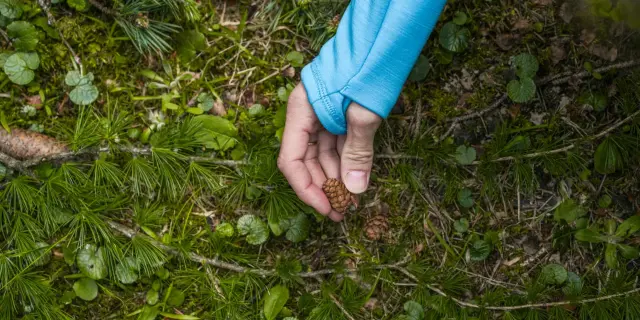
Yes, in small quantities — what you can hold in one hand — and outside the Federal Wildlife District (DFF) or protected species areas. Make sure to pick the flower without pulling out the plant, in order to preserve its roots.
Mushroom picking is allowed outside the Federal Wildlife District of the Upper Val de Bagnes, provided local regulations are respected.
Stay quiet, keep your distance and avoid sudden movements. Discover our tips for behaving responsibly in nature.
To protect natural habitats and avoid disturbing sensitive species.
Yes, but in some areas they must be kept on a leash. Please follow the signs on site. Keeping dogs on a leash helps protect wildlife, especially during the breeding season (spring and summer). Remember to pick up their waste, as it can be harmful to livestock.
To protect wildlife during sensitive periods, particularly during the breeding season, and to ensure human safety.